Bitcoin Mining Explained: Work, Pools, and Power
Understand candidate blocks, accepted work, mining pools, and electricity before reading an earnings chart.
₿ Work, pools, and power
Understand Bitcoin mining from candidate blocks to accepted work, then connect the protocol to equipment, electricity, pool terms, and operational records.
Mining hardware tests candidates; a successful result must still satisfy the network’s rules. Our guide introduces the relationship between mining software, hash attempts, pool shares, and blocks.
Keep local hash rate, pool estimates, accepted work, and settled payouts distinct. A clear timestamp and measurement boundary are more useful than an impressive screenshot with no definitions.
Use electricity arithmetic to learn the units—not to manufacture a profit claim. Explore power, cooling, maintenance, and custody questions before treating a hardware specification as a complete operating plan.
Keep exploring
Understand candidate blocks, accepted work, mining pools, and electricity before reading an earnings chart.
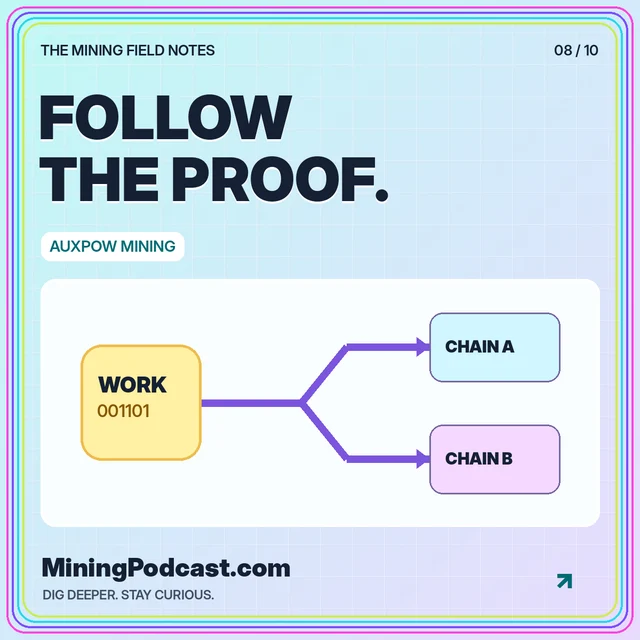
Separate parent-chain work, auxiliary-chain verification, pool services, and payout rules.
Learn what a Litecoin miner does and why algorithm compatibility and payout currency are separate questions.