“Scrypt coin mining” sounds like a single activity, but it can describe several different arrangements. A device may perform Scrypt proof of work directly. A pool may coordinate a compatible merged-mining relationship. A service may mine something else and convert the proceeds into a Scrypt-based coin. These are not interchangeable explanations, even when the same coin symbols appear on their dashboards.
The way through the confusion is to trace the workload, the protocol, and the payment path separately. This guide introduces a compatibility framework you can reuse without relying on a list of supposedly profitable coins. Lists change, while clear questions about algorithms, accepted work, and settlement remain useful.
What the word Scrypt actually identifies
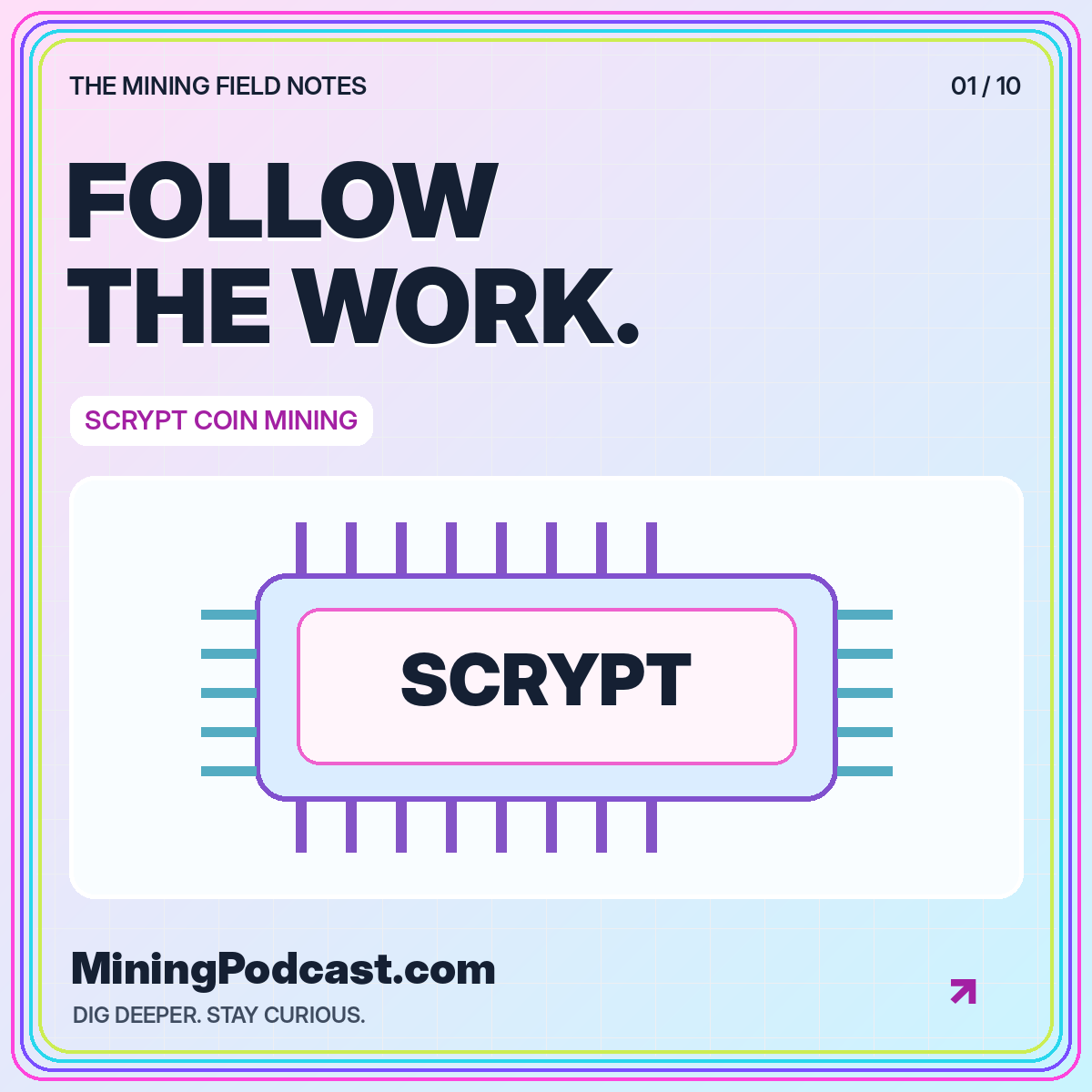
The scrypt specification in RFC 7914 describes a password-based key-derivation function built around memory-hard computation. Cryptocurrency proof-of-work uses of Scrypt need to be understood through the relevant chain's implementation and parameters. The word alone does not describe a wallet, an exchange, a mining pool, or a complete business model.
This distinction also prevents an overly simple conclusion: memory-related work does not mean that specialized hardware can never be built for a specific workload. Nor does sharing the name guarantee identical parameters. Treat the algorithm label as the start of technical verification. It is not the end of the compatibility checklist and should not be used as a substitute for documentation.
Separate four layers before comparing services
The first layer is the workload: what computation is actually performed? The second is the chain: which rules determine whether a submitted block is valid? The third is the service: who assigns work and accounts for contributions? The fourth is settlement: in what asset and under what conditions does a participant receive payment?
Write these four labels across a page. Then place each claim from a service description under the correct heading. “Pays in Litecoin” belongs under settlement unless the service separately establishes that the work is Litecoin mining. “Supports Scrypt” describes a workload capability but does not identify every supported chain. This simple sorting exercise often reveals what a promotional paragraph leaves unanswered.
A device must match the actual workload
The term ASIC describes specialization, not universal cryptocurrency compatibility. A machine built for one algorithm should not be assumed to perform another. Similarly, the presence of a powerful GPU does not establish that a particular mining workload is practical for that device under current conditions.
For an educational equipment comparison, record the exact algorithm, supported operating modes, nominal hash-rate units, power assumptions, and documentation version. Do not compare raw numbers across algorithms. Keep supplier claims separate from measurements made under known conditions. See the ASIC mining guide for an example of how to label efficiency calculations without turning them into a purchasing recommendation.
The same algorithm does not guarantee merged mining
Merged mining requires more than two networks sharing a hashing algorithm. The relevant protocol relationship and supporting software must also exist. A pool needs to implement that relationship correctly, monitor it, and explain how any resulting proceeds are treated.
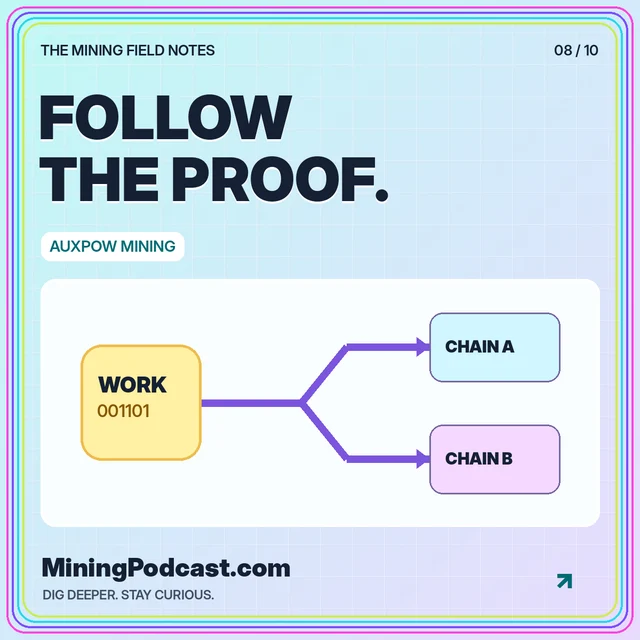
When a site lists many Scrypt coin logos, ask whether each represents direct mining, auxiliary-chain participation, exchange conversion, or simply an available payout currency. The answer may be different for different logos. Our AuxPoW guide explains why proof verification and payout policy are distinct. Never infer a protocol integration solely from a service's payment options or a generic statement that it supports multiple coins.
Read pool accounting before reading a return chart
Identify what the pool counts as accepted work, how estimated rates are calculated, and which period the dashboard covers. Then examine the payout method, fees, thresholds, settlement schedule, and any conversion terms. A busy graph does not eliminate the need to understand these definitions.
Suppose a fictional service shows an estimated balance of 12 units, a payable balance of 9 units, and a minimum withdrawal of 10 units. Those three numbers describe different states. Combining them into “12 units earned and available” would be inaccurate. This invented example is about reading labels, not about any real provider. Write the definitions beside the numbers so the distinction survives when the screenshot is shared.
A coin name is not a network identifier
Similar names and tickers can create confusion. Verify the intended project, network, wallet address format, and service documentation rather than relying on a short symbol alone. A payout selection deserves the same attention as the mining algorithm because a correct workload does not fix an incorrect destination.
Keep wallet recovery material separate from ordinary account information. Demonstration screenshots and support conversations should not contain private keys or recovery phrases. For a learning project, create a written checklist using non-sensitive example labels instead of real wallet data. The objective is to make the process reproducible without normalizing the collection of secrets that have nothing to do with explaining mining compatibility.
Measure energy with the right boundary
A hypothetical device using 1.8 kilowatts for 10 hours consumes 18 kilowatt-hours. That statement is arithmetic, not a profit estimate. It says nothing about accepted work, payouts, cooling overhead, or the price at which any proceeds might be exchanged.
Choose a measurement boundary and label it. “Device input power” and “facility power” are different scopes. Keep elapsed time consistent when comparing energy with work. If one chart covers a full day and another excludes downtime, their ratio may not answer the question you think it does. This is why a carefully labeled small experiment is more instructive than a large spreadsheet assembled from incompatible screenshots.
Think about maintenance and exit conditions
Before an operational trial, write down who monitors the system, what counts as an abnormal condition, and how the trial will be stopped safely. Installation and electrical suitability should be assessed by qualified professionals using the manufacturer's requirements. An educational article cannot establish that a particular room, circuit, or ventilation arrangement is appropriate.
Also define a non-financial stopping rule for the experiment: missing documentation, unclear settlement terms, inconsistent work records, or unexplained configuration changes are all reasons to pause the assessment. A project that requires increasingly favorable assumptions to remain convincing should be examined rather than expanded. Learning how to reject an unclear claim is a useful outcome in its own right.
Build a reusable comparison card
Create a one-page card for each arrangement. Use the same headings every time: intended chain, algorithm and parameters, device compatibility, pool role, merged-mining role, payout currency, fee basis, measurement window, and unresolved questions. Add the date of review and the exact title of each document consulted.
Keep the card descriptive. Do not force it into a winner ranking when the evidence is incomplete or the intended operating conditions differ. A well-organized comparison might show that two services are not providing the same thing at all. That discovery is more valuable than a score built from superficially similar numbers. The Scrypt topic collection connects this framework to Litecoin and AuxPoW examples.
Check a payment-path example
Imagine a fictional service that performs one workload, exchanges the proceeds, and pays the participant in Litecoin. Your four-layer card should describe the actual workload under computation and Litecoin under settlement. Nothing about that arrangement should be labeled direct Litecoin mining without additional evidence.
This example is useful because the visible asset can be correct while the explanation of the work is wrong. Separating the layers does not automatically make the service good or bad. It simply makes the description accurate enough for its fees, risks, and operating assumptions to be examined on their own terms.
Questions to carry into the next conversation
Ask what work is being performed, what proof the network verifies, and what the pool accepts as a contribution. Ask whether advertised receipts include conversions or auxiliary rewards. Ask what operational costs are outside the displayed calculation and whether the evidence can be reproduced over a consistent time window.
The takeaway is straightforward: follow the work, then follow the payment. Scrypt is an important technical label, but it is not a complete explanation of a mining service. A careful reader can separate protocol facts from operating assumptions and avoid treating a familiar coin logo as proof that everything underneath it is understood.